Study Techniques for Engineering Exams That Actually Work
By Imran Al-Ameen Adebayo · Founder of BrainDrill · 3 July 2026 · 7 min read
Engineering exams are different from most subjects: they don't reward knowing things, they reward doing things— setting up the circuit equations, choosing the right thermodynamic relation, carrying units through four lines of algebra without dropping a negative sign. Which means most generic study advice (highlight, summarise, reread) barely applies. Here's what does.
1. Start from past questions, not from the textbook
Open the past questions beforeyou feel ready. Ten minutes with three years of papers tells you exactly what the examiner cares about — which topics repeat, what depth is expected, how marks are distributed. Then study the material with those questions in mind. Students who study “forward” from chapter one often master material that is never examined while running out of time for what is.
2. The worked-problem method
The core loop for any calculation-heavy course:
- Study one worked example until every step makes sense — no skimming past algebra.
- Close it. Re-solve the same problem from a blank page.
- Stuck? Peek at ONLY the step you need, close it again, continue.
- Repeat until you can solve it cleanly with zero peeks.
- Only then move to an unseen problem of the same type.
The peek-and-close discipline is the whole method. Reading a solution and nodding along is recognition; reproducing it is the skill the exam tests. When you use an AI tutor for this, insist on one that shows its work step by step — an answer without the method is useless to you, and ideally the tool should verify its own final answer rather than just sounding confident. (This is exactly why we built BrainDrill's tutor to re-derive its answers a second, independent way before showing them.)
3. Keep an error log
A cheap notebook (or a note in your study app) with one line per mistake: what went wrong, why, and the rule to prevent it. “Dropped the j in the impedance — always write Z in rectangular form first.” Reviewing your error log the night before an exam is worth more than rereading any chapter, because it's a list of YOUR personal failure modes — and exams are lost on repeated personal failure modes, not on exotic questions.
4. Practise under exam conditions — early
At least twice before the real thing: full past paper, timed, no notes, handwritten. The first attempt is usually humbling — that's the point. You discover that knowing how to solve a problem and solving it in nine minutes under pressure are different skills. Timed practice also teaches triage: which questions to bank first, which to abandon.
5. Explain it to someone
The teach-back test: if you can explain why the power factor matters to a coursemate (or out loud to an empty room) without notes, you understand it. If you can't, you found a gap while it's still cheap to fix. Study groups built around explaining problems to each other — not around sharing summaries — consistently outperform solo grinding. A live study room with a shared problem and a timer is the modern version of this.
6. Space it, don't binge it
Six separate 45-minute problem sessions across two weeks beat one heroic 5-hour night, with the same total time. Spacing forces your brain to retrieve partially-forgotten methods, and that retrieval is what makes them stick. Schedule the sessions in a calendar with reminders — the plan you don't schedule is the plan you don't do.
The one-sentence version
Find out what's examined, solve problems from a blank page until the method is yours, log every mistake, rehearse under time, explain it out loud, and spread the work across days. None of it is glamorous. All of it works.
Put this into practice with BrainDrill
An AI tutor that shows its work step by step, quizzes generated from your own notes, and live study rooms with friends. Free to start — no card needed.
Try BrainDrill free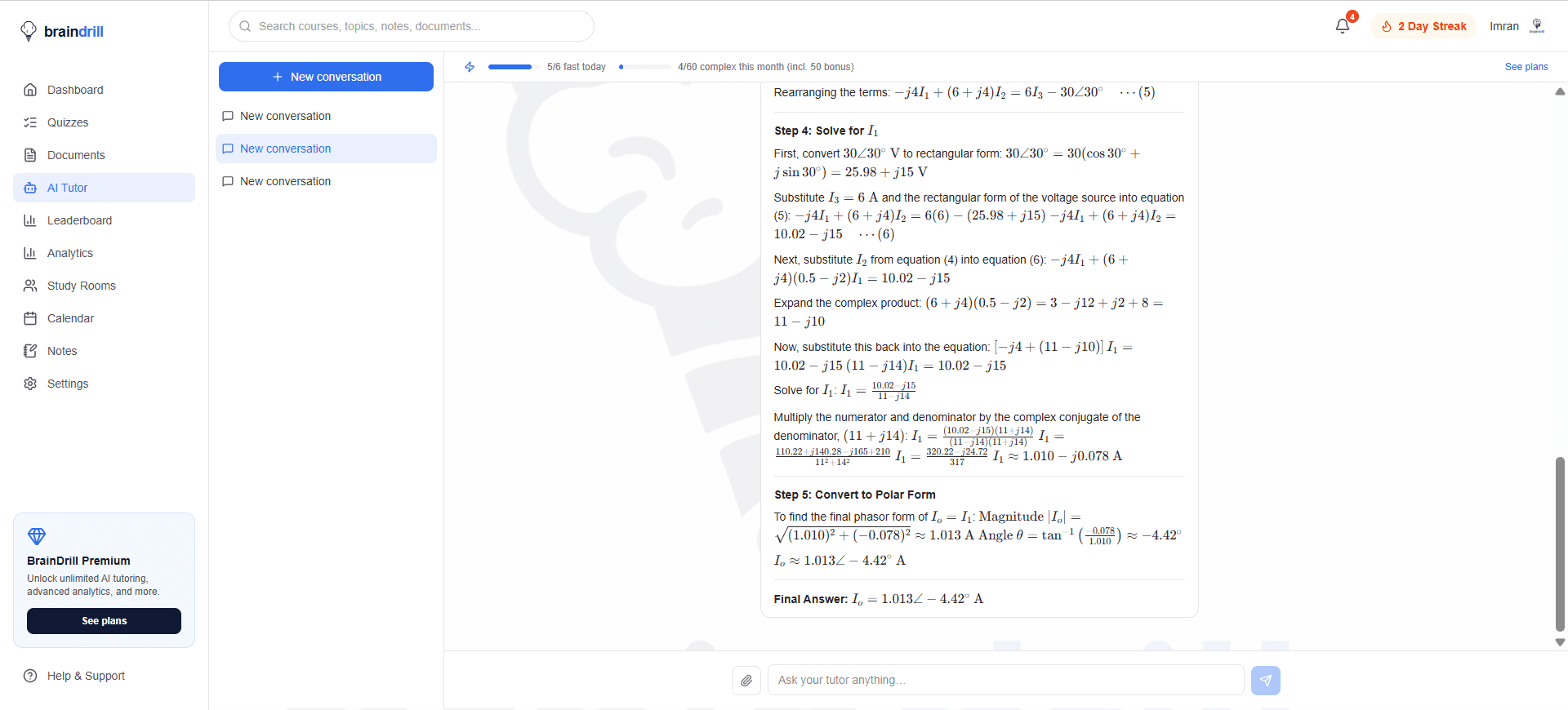
Imran Al-Ameen Adebayo
Engineering student and founder of BrainDrill — building the study app he wished he had. Read his story →
Study smarter, straight to your inbox 📬
One short email a week: a study technique that works, a topic worth drilling, and what's new in BrainDrill. Free, no spam, unsubscribe anytime.