How to Study Thermodynamics (Without Drowning in Signs and Symbols)
By Imran Al-Ameen Adebayo · Founder of BrainDrill · 12 July 2026 · 6 min read
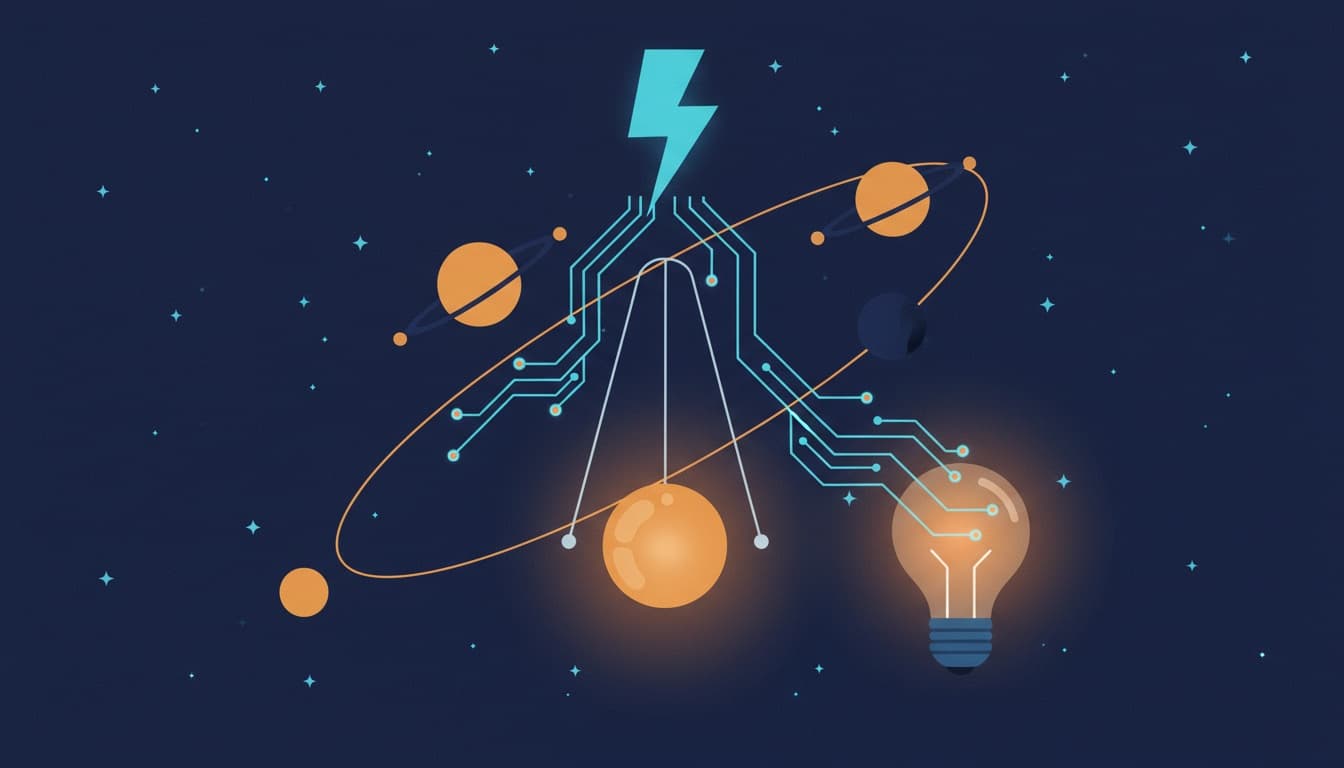
Thermodynamics has a reputation problem: students meet invisible quantities, clashing sign conventions and Greek letters all at once, and conclude the subject is abstract. It isn't. Thermodynamics is bookkeeping— energy in, energy out, what's left — and students who treat it that way find it almost mechanical.
The first law is an accounting identity
Write (or your course's variant) at the top of every problem and treat it like a bank statement: is deposits of heat, is withdrawals of work, is the balance change. Pick one sign convention — whichever your lecturer uses — write it on the first page of your notes, and never improvise. Mixing conventions mid-problem is the single most common thermodynamics error in existence.
State vs path: the distinction that unlocks everything
Internal energy, temperature, pressure, entropy — state functions; they only care where you are. Heat and work — path functions; they care how you got there. This is why and differ between paths joining the same two states while doesn't, and why cycle problems always close with . Half of exam trickery is testing whether you truly hold this distinction.
Learn the four canonical processes as a table
Isothermal, isobaric, isochoric, adiabatic — build one table from memory with what's constant, what becomes, what becomes, and the ideal-gas relation that applies (e.g. adiabatic: , ). Rebuilding that table from a blank page weekly is worth more than rereading the chapter, because every cycle problem is just these four processes chained together.
The second law: efficiency has a ceiling
Engines convert heat to work, and nature caps the conversion: for the ideal Carnot engine, with real engines below it. Entropy is the law's ledger — for any real process the total entropy of system plus surroundings rises. When an exam asks "is this process possible?", it is asking you to compute and check its sign. Practise that specific move; it appears every year.
A problem ritual that prevents disasters
- Draw the boundary. System, surroundings, and what crosses (heat? work? mass?). Most setups die here.
- Name the process. Which of the four is it — or which chain?
- Write the law before the numbers. First law with your convention, then substitute.
- Sanity-check signs. Gas compressed → work done ON it; temperature rose with no heat → adiabatic compression. If a sign contradicts the physical story, stop.
- Log every error by cause — convention slip, wrong process, algebra — and re-solve from blank paper two days later. When a step refuses to make sense at midnight, get it explained step-by-step immediately rather than letting the confusion compound into next week's cycle problems.
Where the marks live
Exam thermodynamics is remarkably repetitive: first-law bookkeeping on a process chain, a cycle efficiency, an entropy-change verdict, and one property-table lookup (steam or refrigerant). Drill those four families with mixed practice until recognising the family takes five seconds — that recognition, not brilliance, is what an A looks like.
Frequently asked questions
Why is thermodynamics considered so hard?+
Three reasons: the quantities are invisible (you can't picture entropy the way you picture a force), every textbook uses slightly different sign conventions, and the subject punishes vague understanding — a problem is either set up exactly right or the answer is nonsense.
What should I master first?+
The first law as strict bookkeeping, state vs path functions, and ONE sign convention you never abandon. Most exam errors trace back to one of these three, not to advanced concepts.
How do I get better at thermodynamics problems?+
Adopt a fixed ritual: define the system boundary, list what crosses it, write the first law before touching numbers, and sanity-check the sign of every result. Then drill cycles and entropy problems until the ritual is automatic — recognition grows from volume.
Put this into practice with BrainDrill
An AI tutor that shows its work step by step, quizzes generated from your own notes, and live study rooms with friends. Free to start — no card needed.
Try BrainDrill free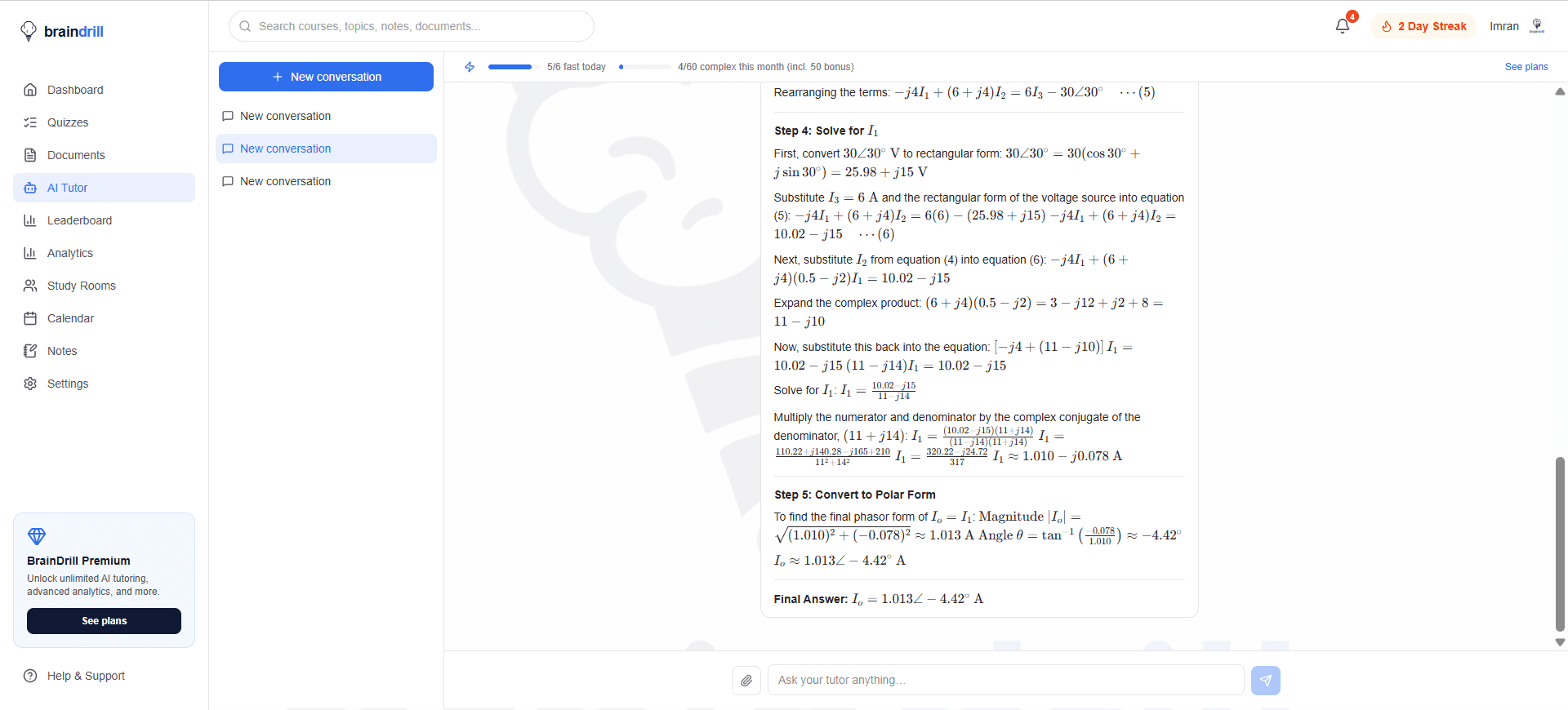
Imran Al-Ameen Adebayo
Engineering student and founder of BrainDrill — building the study app he wished he had. Read his story →
Study smarter, straight to your inbox 📬
One short email a week: a study technique that works, a topic worth drilling, and what's new in BrainDrill. Free, no spam, unsubscribe anytime.