
Why Smart Students Still Fail Exams — and How to Fix It
By Imran Al-Ameen Adebayo · Founder of BrainDrill · 8 July 2026 · 6 min read

Plenty of capable, hard-working students walk out of exams disappointed. Usually it is not about intelligence or effort — it is about spending that effort on the wrong activities. Here are the most common reasons smart students underperform, and a concrete fix for each.
1. They reread instead of testing themselves
Rereading notes feels productive because the material grows familiar — but familiarity is not the same as being able to recall it under pressure. The fix is retrieval practice: turn your notes into quizzes and answer from memory. The discomfort of struggling to recall is exactly what builds durable memory.
2. They ignore past questions
Most exams reuse topics and question styles heavily, so past papers are a probability map of what is coming. Students who skip them study everything equally and run out of time on what matters. The fix: start every course's revision with several years of past questions, and weight your time toward the topics that appear again and again.
3. They avoid their weakest topics
It feels good to revise what you already know, so many students polish their strengths and quietly avoid the topics that scare them — which are precisely the ones costing them marks. The fix: keep a one-line error log and deliberately re-attempt your weak points until they are no longer weak. When a problem defeats you, get it explained step by step, then re-solve it yourself from scratch.
4. They never practise written answers
Objective questions are the easy marks; theory and essays decide grades, yet they are the least practised because self-marking is uncomfortable. The fix: write full answers to past theory questions and get them graded against marking points, so you learn what an examiner actually rewards. A study app that grades written answers makes this painless.
5. They cram the night before
Last-minute cramming raises anxiety and wrecks sleep, both of which hurt recall in the hall. The fix: spread short retrieval sessions across days or weeks, and treat the final night as light review of your error log plus real rest.
6. They confuse being busy with making progress
Highlighting, recopying notes and watching explanations all feel like studying, but they are mostly passive. The rule that cuts through it: if an activity does not make you recall or produce something, it probably is not working. Build your study around testing yourself.
The pattern behind all of them
Every fix above is the same idea — replace passive input with active retrieval, and aim your effort at your weak points and the highest-weighted topics. BrainDrill is built around that: it turns your notes into quizzes, grades your written answers, explains the questions you keep missing, and it is free to start.
Put this into practice with BrainDrill
An AI tutor that shows its work step by step, quizzes generated from your own notes, and live study rooms with friends. Free to start — no card needed.
Try BrainDrill free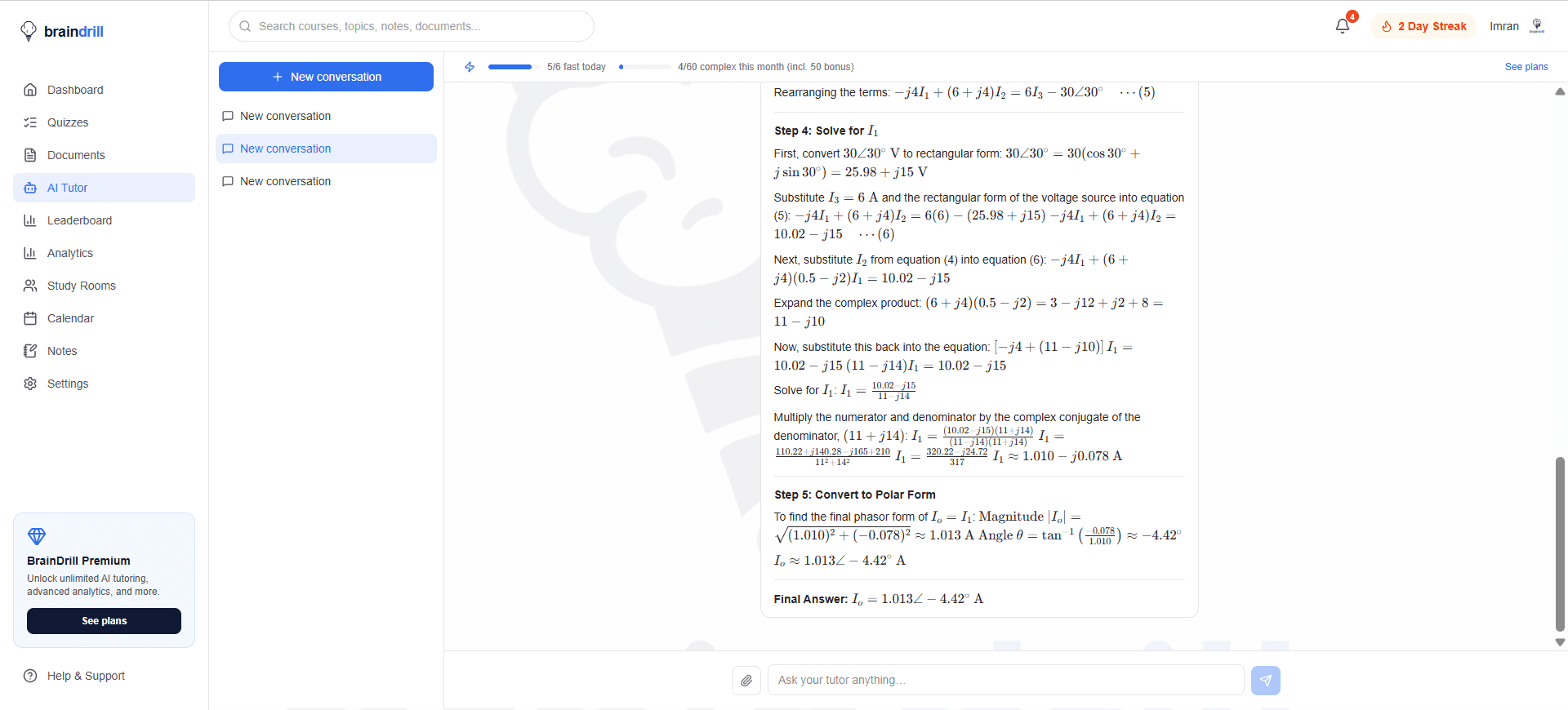
Imran Al-Ameen Adebayo
Engineering student and founder of BrainDrill — building the study app he wished he had. Read his story →
Study smarter, straight to your inbox 📬
One short email a week: a study technique that works, a topic worth drilling, and what's new in BrainDrill. Free, no spam, unsubscribe anytime.