
WASSCE Revision in Ghana: The Core & Elective Maths Playbook
By Imran Al-Ameen Adebayo · Founder of BrainDrill · 12 July 2026 · 6 min read

WASSCE rewards preparation that mirrors the exam: past questions, timed practice, and method marks earned line by line. Ghanaian students sit the same regional papers as the rest of West Africa — but the aggregate system and programme cutoffs shape what to prioritise. Here's the playbook.
Let your aggregate target run the schedule
University admission runs on your best six — the four cores (English, Core Maths, Integrated Science, Social Studies) plus your two best electives. That arithmetic has a strategy inside it: an A1 rescued in a strong subject moves your aggregate as much as one dragged out of your weakest. Push your near-A subjects to A1 and defend Core Maths and English from failure — those two gate everything regardless of aggregate.
Core Maths: the recurring families
Every year, the paper leans on the same clusters: algebraic manipulation and equations, percentages and ratios, geometry and mensuration, trigonometry basics, statistics and probability, and word problems that dress algebra in market-day clothing. Drill the algebra core with step-by-step equation practice until method is automatic — Section B rewards visible working generously.
Elective Maths: depth wins
Surds and indices, binomial expansion, coordinate geometry, differentiation and integration, vectors, mechanics and statistics — Elective Maths is WASSCE's deepest paper, and it punishes formula-memorising without understanding. For calculus, build the foundations properly (derivative rules first, then applications) and practise past questions by topic before mixing.
The weekly cycle from now to the exam
- Two timed past-question sessions (one Core, one your priority elective), marked with the scheme, honestly.
- One repair session drilling exactly the topics the marking exposed.
- One error-log review — topic, cause, fix, one line per miss. By exam week this log is your personal syllabus.
- Read one chief examiner's report per subject per term — WAEC literally publishes the mistakes to avoid.
Study help when the day runs out
Between school, chores and light-off, most WASSCE study happens at night — exactly when no teacher is reachable. That's the gap an AI tutor closes: snap the past question, get the steps explained (not just the answer), then re-solve it yourself from blank paper. Add one weekly group session with classmates — teaching each other Section B solutions is revision for the explainer and the listener at once.
Exam-hall arithmetic
Answer the required number of questions — no extra credit exists for attempting more. Sweep every question's early parts before wrestling any (a), (b), (c) chain to its hardest link, show substitution before evaluation, and keep units on every line. WASSCE grades method; write like the marker is reading over your shoulder.
Frequently asked questions
What aggregate do I need for university admission in Ghana?+
Public universities compute an aggregate from your best six subjects (four core + two electives, graded A1=1 to F9=9 — lower is better). Competitive programmes like medicine or law at Legon and KNUST typically demand aggregates in the 6–10 range, which means A1/B2 grades across the board. Know your target programme's recent cutoffs and let them set your subject priorities.
Which matters more — Core Maths or Elective Maths?+
Core Mathematics is compulsory for your aggregate and for nearly every admission; failing it blocks everything. Elective Maths matters enormously for engineering, physical sciences and economics programmes. If you're a science student, both are priorities; if not, Core Maths still is.
Are past questions really the key to WASSCE?+
Yes — WAEC recycles topic families and question styles with remarkable consistency. Working past questions under timed conditions, marking honestly with the scheme, and repairing weak topics is the highest-yield preparation known for this exam. Chief examiners' reports (which list the mistakes candidates make every year) are an underused goldmine.
Put this into practice with BrainDrill
An AI tutor that shows its work step by step, quizzes generated from your own notes, and live study rooms with friends. Free to start — no card needed.
Try BrainDrill free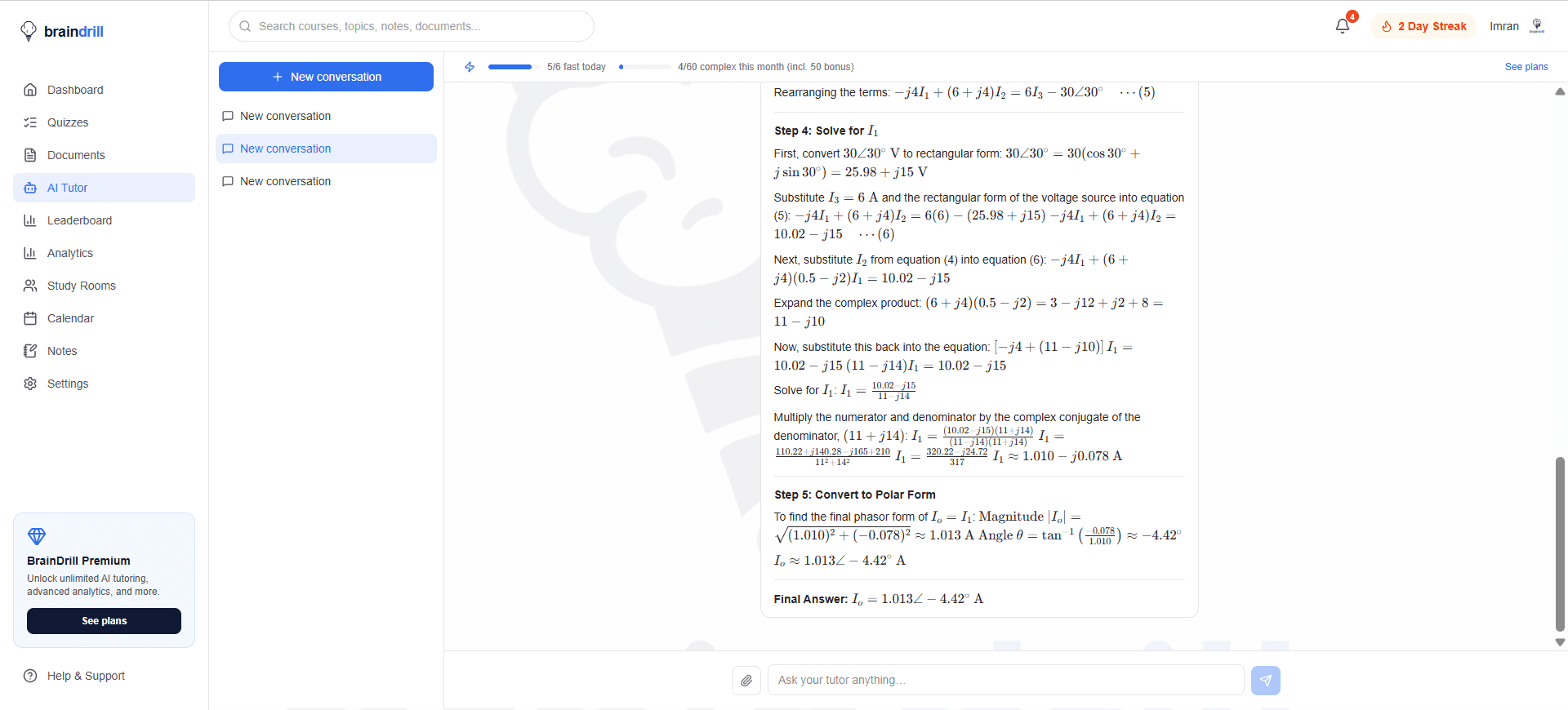
Imran Al-Ameen Adebayo
Engineering student and founder of BrainDrill — building the study app he wished he had. Read his story →
Study smarter, straight to your inbox 📬
One short email a week: a study technique that works, a topic worth drilling, and what's new in BrainDrill. Free, no spam, unsubscribe anytime.