
How to Turn Lecture Notes into Practice Quizzes (and Why It Beats Rereading)
By Imran Al-Ameen Adebayo · Founder of BrainDrill · 3 July 2026 · 6 min read

Here's an uncomfortable fact backed by decades of research: rereading your notes is one of the least effective ways to study. It feels productive because the material looks familiar — but familiarity is not the same as being able to reproduce it in an exam hall. Psychologists call the fix the testing effect: actively pulling answers out of your memory strengthens it far more than passively pushing information in. In study after study, students who quizzed themselves outperformed students who reread, often by a full grade.
The most practical way to use the testing effect is to turn your own lecture notes into practice quizzes. Here's how to do it — manually first, then the faster way.
The manual method (works with paper and pen)
- Write questions in the margin.As you review each section of your notes, write one question the section answers. “State Kirchhoff's current law” next to the definition; “Why does entropy increase here?” next to the worked example.
- Cover and answer.Next session, cover the notes and answer only from the margin questions — out loud or on paper. No peeking until you've committed to an answer.
- Mark yourself honestly.Three piles: got it, half-got it, blanked. The “blanked” pile is tomorrow's starting point.
- Space it out. Re-test the same questions after a day, then three days, then a week. Spacing multiplies the effect — cramming the same questions ten times in one evening is worth less than testing three times across a week.
The faster method: let AI write the quiz from your notes
The manual method works, but writing good questions is slow — and most students quietly skip it. This is one of the few places where AI genuinely changes the game: modern study apps can read your uploaded lecture notes, slides, or past questions and generate a practice quiz from them in seconds.
A few things separate a useful notes-to-quiz tool from a gimmick:
- It should quiz from YOUR material, not generic textbook questions. Your lecturer's emphasis is what appears in your exam.
- It should include theory questions, not just multiple choice. Real exams ask you to explain and derive. A tool that grades your written answer — and shows the marking points you hit or missed — trains the skill that actually gets examined.
- Explanations matter more than scores. A wrong answer with a clear explanation is a learning event; a wrong answer with a red X is just bad news.
This workflow is built into BrainDrill: upload your lecture notes or past questions, get a quiz with both objective and theory questions, answer by typing or photographing your handwritten work, and get graded with examiner-style feedback. Wrong answers can be sent straight to the AI tutor to explain.
A realistic weekly routine
- Same day as the lecture (10 min): skim notes, generate or write the quiz.
- Next day (15 min): take the quiz cold. Log what you blanked on.
- Weekend (20 min): retake missed questions only, plus one older topic.
- Pre-exam: your accumulated quizzes ARE your revision plan — no last-minute guessing about what to study.
Forty-five minutes a week, per course, and every minute is active recall. That's the whole trick: stop rereading, start retrieving.
Put this into practice with BrainDrill
An AI tutor that shows its work step by step, quizzes generated from your own notes, and live study rooms with friends. Free to start — no card needed.
Try BrainDrill free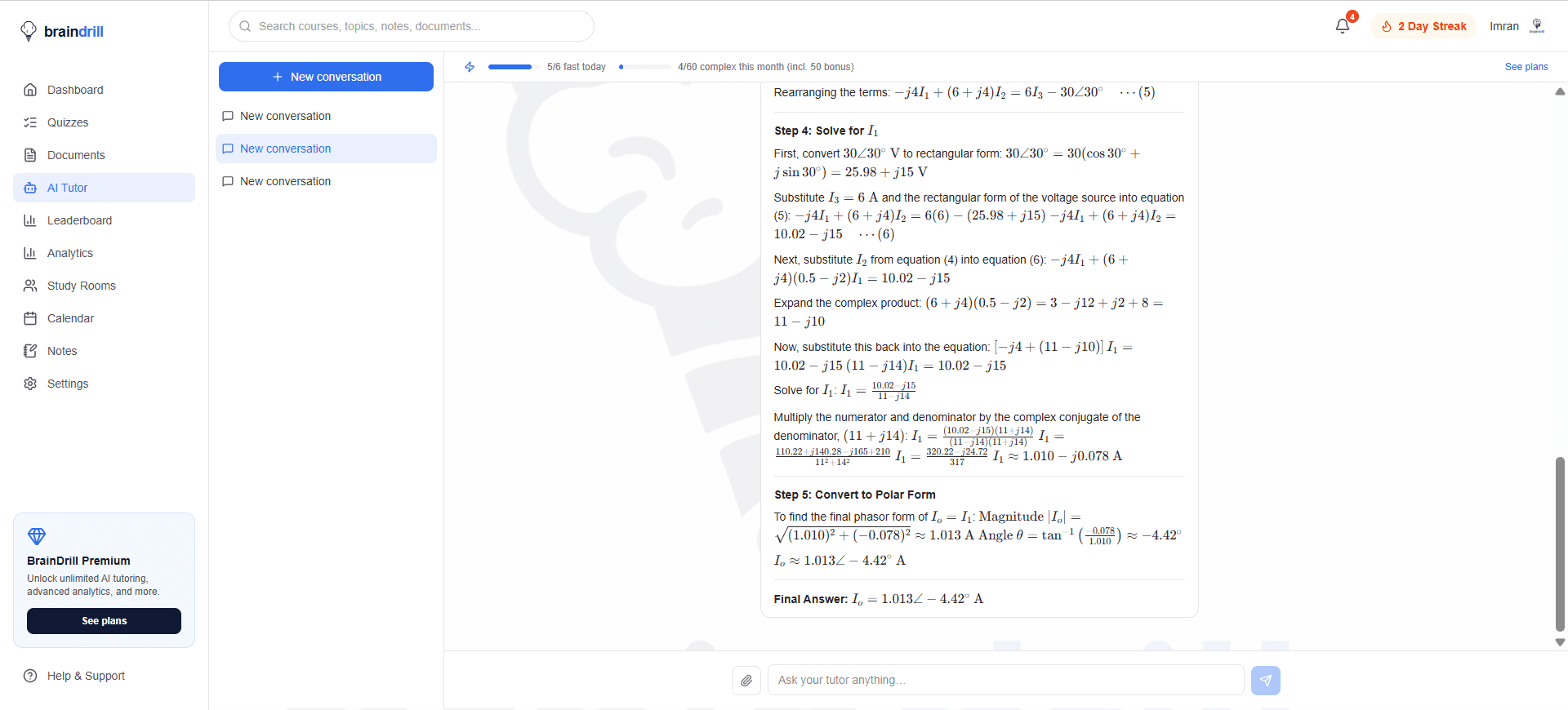
Imran Al-Ameen Adebayo
Engineering student and founder of BrainDrill — building the study app he wished he had. Read his story →
Study smarter, straight to your inbox 📬
One short email a week: a study technique that works, a topic worth drilling, and what's new in BrainDrill. Free, no spam, unsubscribe anytime.