
How to Make a Study Timetable You'll Actually Follow
By Imran Al-Ameen Adebayo · Founder of BrainDrill · 3 July 2026 · 6 min read
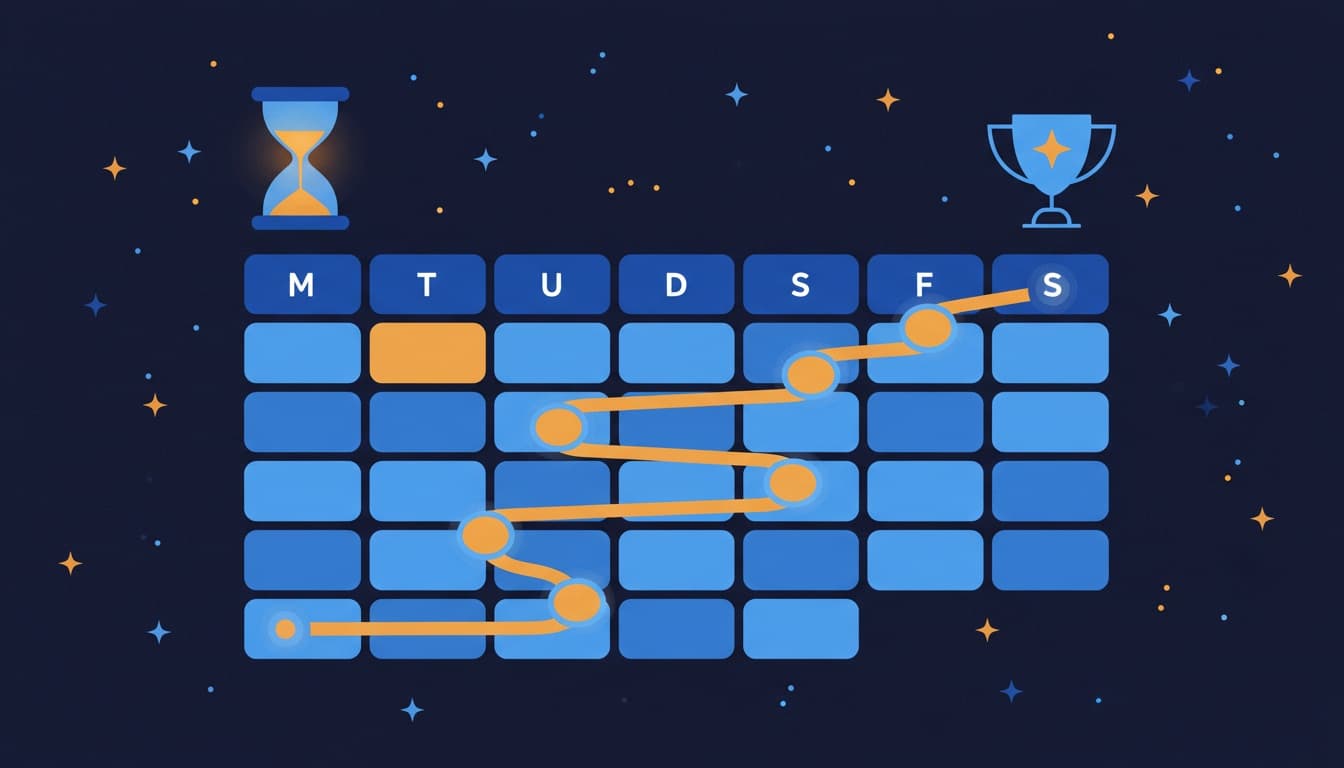
Everyone has made the beautiful timetable: colour-coded, every hour accounted for, starting Monday. And everyone has abandoned it by Thursday. The problem is never discipline — it's that most timetables are built for a fantasy version of you who doesn't get tired, doesn't have surprise assignments, and enjoys studying at 6am. Here's how to build one for the real you.
Rule 1: Schedule less than you think you can do
The number one timetable killer is overcommitment. Miss two sessions and the guilt makes you abandon the whole plan. Start with one focused hour per weekdayand a longer weekend block. A plan you follow at 100% beats a plan you follow at 30% — and you can always add more once the habit holds. Consistency compounds; ambition alone doesn't.
Rule 2: Give time by credit units, not by preference
Left alone, everyone studies the courses they like. But your GPA weighs courses by credit units — a 4-unit course moves your average twice as hard as a 2-unit one. List your courses, note their units and how hard each is for you, and split your weekly hours proportionally. The uncomfortable conclusion is usually the right one: the course you avoid is the course that needs the biggest slot.
Rule 3: Fixed slots beat daily decisions
“I'll study when I'm free” means negotiating with yourself every single day — and losing most of them. Attach study to fixed anchors instead: right after your last lecture, same hour every evening, straight after dinner. When the slot is automatic, willpower is no longer part of the decision. Put the subject in the slot too: Monday is Thermo, Tuesday is Maths. Deciding what to study at the moment you sit down is its own energy leak.
Rule 4: Make the sessions active, or the hours are fake
An hour of rereading notes counts as an hour on the timetable and close to zero in the exam hall. Fill slots with work that forces retrieval: solve past questions from a blank page, quiz yourself on this week's notes, re-derive the formulas you “know”, explain a concept out loud. If a session doesn't make your brain sweat somewhere, it was decoration.
Rule 5: Let something else do the remembering
A timetable that lives on paper (or in your head) relies on you remembering it at the exact moment you're tired and distracted. Put your sessions in a calendar that sends notifications — your phone's own calendar works, and BrainDrill's built-in calendar can push a reminder before each study session and exam you add. The point is that starting the session should require zero memory and zero decision: the reminder fires, you sit down, the subject is already chosen.
Rule 6: Plan the miss
You WILL miss sessions — sickness, assignments, life. The difference between a timetable that survives and one that dies is what a miss means. Decide in advance: a missed session moves to the weekend catch-up block, and missing one day never cancels the next. The weekend block exists precisely to absorb the week's wreckage; on a good week, it becomes revision.
A concrete starting template
- Mon–Fri: one 50-minute session after your last lecture, subject fixed per day, heaviest courses getting two days.
- Saturday: 2-hour block — first hour catches up anything missed, second hour is past questions under time.
- Sunday: 30 minutes — review the week's error list and set next week's targets.
That's roughly six focused hours a week — modest on purpose. Run it for three weeks before judging it. Then grow it only if you're hitting it consistently. The timetable you follow in week seven is the one that changes your CGPA; the beautiful one that died on Thursday changes nothing.
Put this into practice with BrainDrill
An AI tutor that shows its work step by step, quizzes generated from your own notes, and live study rooms with friends. Free to start — no card needed.
Try BrainDrill free
Imran Al-Ameen Adebayo
Engineering student and founder of BrainDrill — building the study app he wished he had. Read his story →
Study smarter, straight to your inbox 📬
One short email a week: a study technique that works, a topic worth drilling, and what's new in BrainDrill. Free, no spam, unsubscribe anytime.