
IGCSE Maths Revision: The A* Method for Extended Papers
By Imran Al-Ameen Adebayo · Founder of BrainDrill · 12 July 2026 · 6 min read
IGCSE Maths is one of the most predictable exams on earth: Cambridge and Edexcel recycle the same topic families every session, in similar proportions, with published mark schemes. That makes the A* less about brilliance and more about running a system — here it is.
The topics every Extended paper leans on
- Algebra — rearranging, simultaneous equations, quadratics (factorise, formula, complete the square), inequalities, sequences and the nth term. The largest slice by far; drill it with step-by-step quadratic practice.
- Number — percentages (reverse percentage traps!), ratio, standard form, bounds and accuracy.
- Geometry & mensuration — circle theorems, similarity and area/volume scale factors, arc-and-sector formulas.
- Trigonometry — SOHCAHTOA, sine and cosine rules, bearings, 3-D problems.
- Functions, graphs & calculus's doorstep — composite/inverse functions, graph transformations, differentiation for turning points (Extended).
- Probability & statistics — tree diagrams, conditional probability, cumulative frequency, histograms.
Structure the year around paper cycles
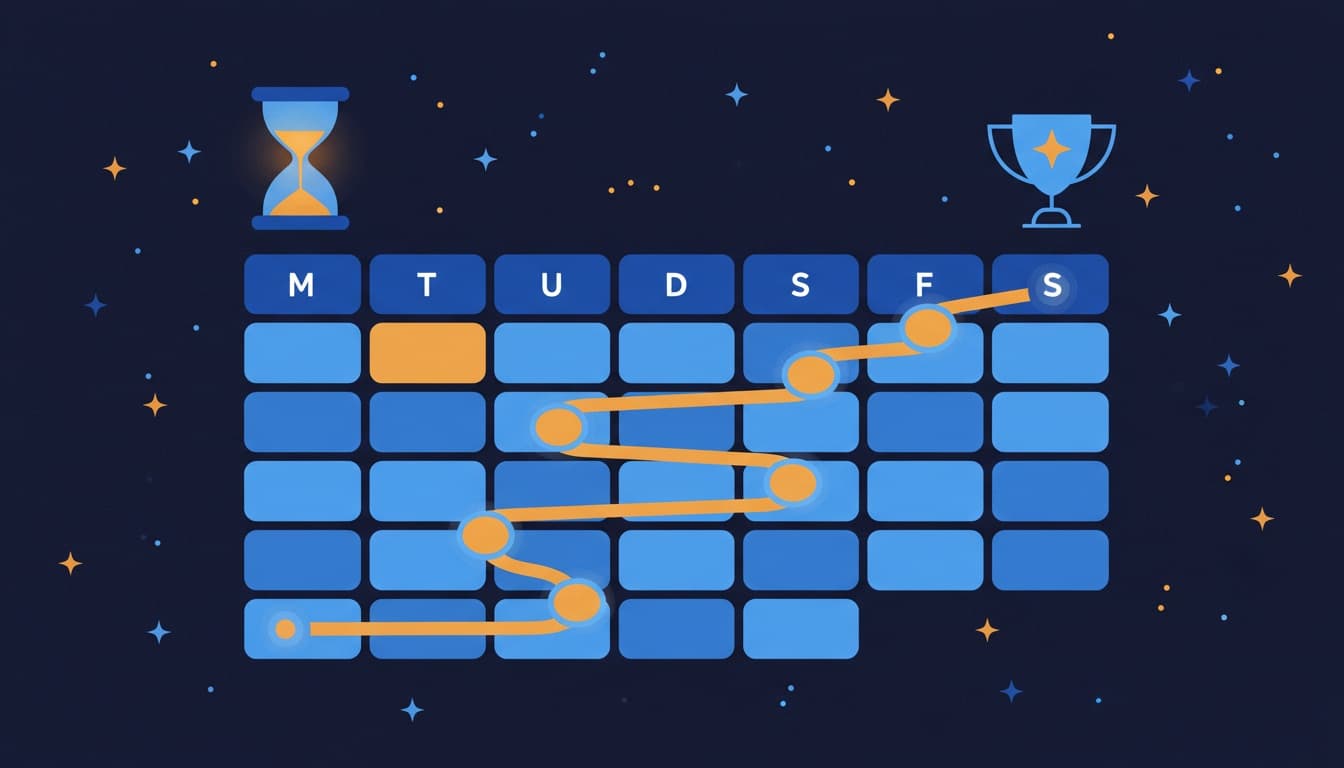
From two terms out, alternate: one sitting per week of a real past paper under timed conditions, then a repair week drilling exactly the topics that dropped marks. Mark with the official scheme and award method marks the way the examiner would — IGCSE gives credit for correct method even with a wrong final answer, which changes how you should write everything.
The working-marks habit
The single cheapest grade upgrade in IGCSE: show every step, always. Write the formula before substituting, keep intermediate values to more accuracy than the final answer needs, and give answers to exactly the accuracy demanded (3 significant figures unless told otherwise — degrees to one decimal). Candidates lose entire grades to rounding habits and invisible working, not to mathematics.
Calculator fluency is a topic — treat it like one
Know your model's fraction key, ANS memory, table mode and equation solver cold, and practise on the exact calculator you'll sit with. On Paper 2/4, a student fluent with table mode checks graph questions in seconds and reclaims minutes for the heavy questions at the back.
The final month
Papers and error-log only — no new content. Re-solve every logged mistake from blank paper 48 hours after fixing it, and when a mark scheme's line makes no sense at 10pm, get the step explained immediately rather than carrying the confusion into the next paper. Walk in having already sat fifteen exams; the sixteenth is just the one they happen to grade.
Frequently asked questions
Core or Extended — which IGCSE Maths tier should I take?+
Core caps your grade at C (grade 5), so any student targeting A/A* or needing maths for A-Levels or IB must sit Extended. If you're consistently above ~70% on Core practice papers, you belong in Extended — discuss the move with your teacher early, not in exam season.
How is IGCSE Maths different from GCSE Maths?+
Same territory, slightly different emphasis: IGCSE (Cambridge 0580/0980, Edexcel 4MA1) is sat worldwide, tends to be more internationally phrased, and Extended reaches a little further into topics like functions and vectors. The revision method — past-paper cycles with honest marking — is identical.
How many past papers should I do?+
Students hitting A* typically complete 15–25 full papers across the final two terms, each marked with the official scheme and followed by targeted repair of dropped marks. The marking-and-repair step is where the grade moves — papers alone just measure it.
Put this into practice with BrainDrill
An AI tutor that shows its work step by step, quizzes generated from your own notes, and live study rooms with friends. Free to start — no card needed.
Try BrainDrill free
Imran Al-Ameen Adebayo
Engineering student and founder of BrainDrill — building the study app he wished he had. Read his story →
Study smarter, straight to your inbox 📬
One short email a week: a study technique that works, a topic worth drilling, and what's new in BrainDrill. Free, no spam, unsubscribe anytime.