
KCSE Revision: How to Raise Your Grade in Form 4
By Imran Al-Ameen Adebayo · Founder of BrainDrill · 12 July 2026 · 6 min read

KCSE rewards a specific kind of student — not the one who read everything, but the one who practised what the examiners actually ask. The papers are strikingly consistent year to year, which makes them predictable, which makes them beatable. Here's the system.
Know your cluster before you allocate hours
University placement runs on cluster points, and clusters weight subjects differently. Look up your target courses now and let the answer set your priorities: an engineering hopeful lives or dies on Mathematics and Physics; a medicine hopeful on Biology and Chemistry. Mathematics and languages anchor nearly every cluster — they are never safe to neglect.
The topics that carry Mathematics every year
KCSE Maths Paper 1 and 2 recycle the same families: algebra (expressions, equations, quadratics), commercial arithmetic, geometry and constructions, trigonometry, vectors, probability and statistics, and calculus's entry rooms (gradients, simple differentiation and integration). Drill these until the methods are automatic — quadratics and linear equations alone touch a third of the marks. Show working religiously: KCSE marking schemes award method marks even when the final answer slips.
The past-paper cycle (Term 2 onward, weekly)
- Sit a full past paper (or half) under real timing — no notes, no phone.
- Mark with the official scheme, honestly, awarding yourself method marks the way an examiner would.
- Log every dropped mark: topic + cause (didn't know / slipped / misread / ran out of time).
- Repair the logged topics with fresh questions before the next paper — and get confusing steps explained the same day. An AI tutor that walks a solution step-by-step at night, on a phone, in your language, is the modern version of the teacher you can't always reach.
Sciences: practicals are rehearsable
Chemistry, Biology and Physics practicals feel unpredictable but draw from a short list of setups — titrations, food tests, circuit measurements, optics. Rehearse the calculations and table-reading from past practical papers even when lab access is limited; most practical marks are actually maths-and-procedure marks wearing a lab coat.
Languages: marks hide in structure
English and Kiswahili reward structure over inspiration: essay formats (barua rasmi, insha frameworks, functional writing), set-book evidence quoted precisely, and comprehension answers that lift and rephrase rather than freestyle. One practised essay per week, marked against the format, moves language grades faster than any amount of novel-reading in November.
The last eight weeks
No new content — cycle papers, revise the error log, and re-solve every logged question from blank paper 48 hours after first fixing it. Protect sleep like a cluster subject. KCSE is a marathon of consistency dressed as a sprint of brilliance; run it accordingly.
Frequently asked questions
When should serious KCSE revision start?+
Structured revision from the start of Form 4 puts you ahead of most candidates; from Term 2 you should be cycling past papers weekly. The syllabus is cumulative — Form 2 algebra and Form 3 chemistry carry entire KCSE papers, so 'revision' really means re-earning earlier years, not rereading Form 4 notes.
Which subjects should I prioritise?+
Mathematics and English/Kiswahili always (they anchor every cluster calculation), then the subjects your target course cluster weights. Check your intended degree's cluster subjects early — discovering in November that your course needed Physics is a preventable tragedy.
Are past papers really enough?+
Past papers plus honest marking plus repair of what they expose — yes, that cycle is the single most effective KCSE preparation known. Past papers alone, done casually without marking schemes, are just familiar-feeling entertainment.
Put this into practice with BrainDrill
An AI tutor that shows its work step by step, quizzes generated from your own notes, and live study rooms with friends. Free to start — no card needed.
Try BrainDrill free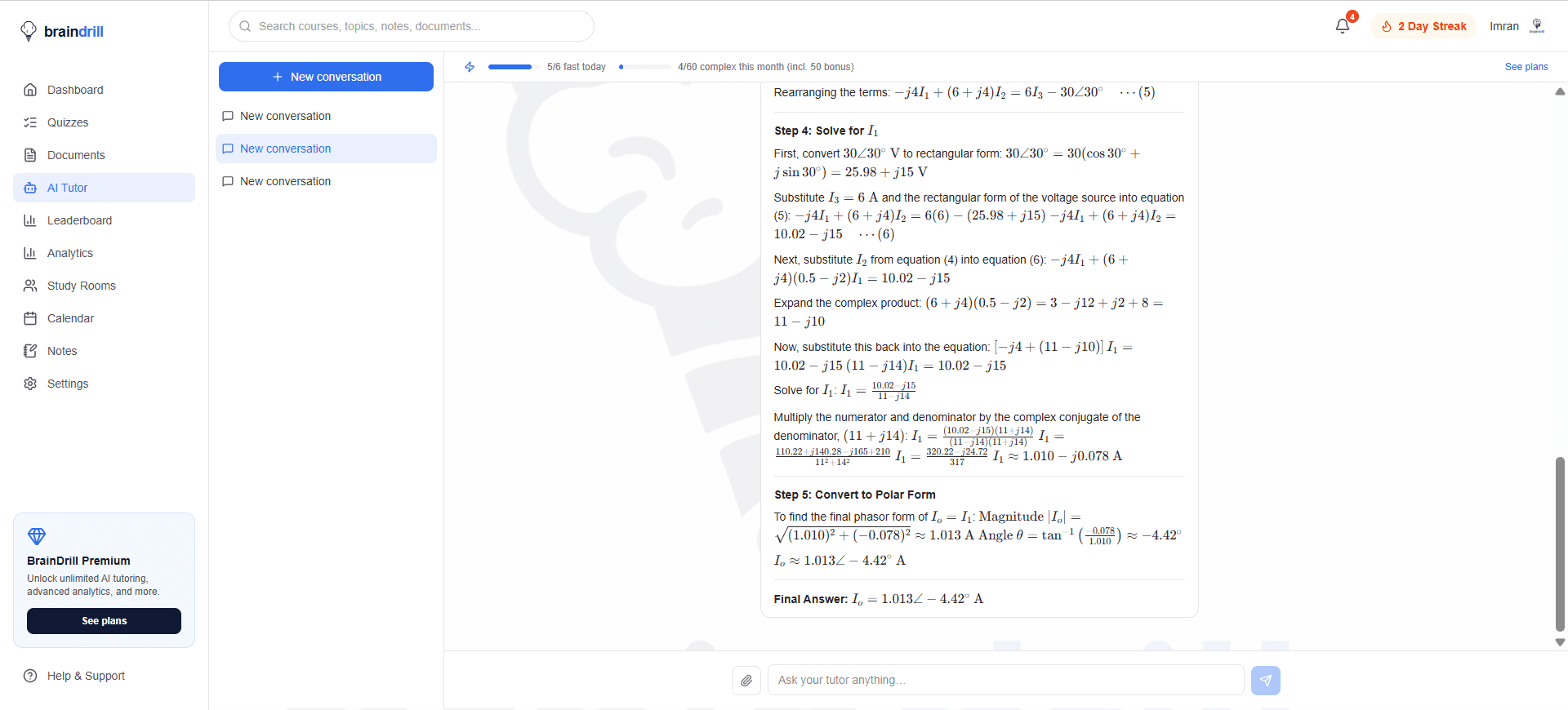
Imran Al-Ameen Adebayo
Engineering student and founder of BrainDrill — building the study app he wished he had. Read his story →
Study smarter, straight to your inbox 📬
One short email a week: a study technique that works, a topic worth drilling, and what's new in BrainDrill. Free, no spam, unsubscribe anytime.