
JEE Main vs JEE Advanced: What Actually Changes
By Imran Al-Ameen Adebayo · Founder of BrainDrill · 12 July 2026 · 6 min read

Every JEE aspirant knows the two exams share a syllabus. What surprises students is how little that means: lakhs of students clear Main comfortably and then get dismantled by Advanced. The difference isn't difficulty — it's question philosophy, and your preparation has to respect it.
Same syllabus, different questions
- Main: one concept per question, generous time, NCERT-anchored chemistry, formula-speed physics and maths. Accuracy under time pressure is the whole game.
- Advanced: two or three concepts braided into one problem — rotation plus energy conservation, definite integration inside a probability question. Add multiple-correct options, paragraph questions and matrix-match, all with scoring schemes that punish guessing.
A useful test of your readiness: can you solve a problem you've never seen before in 8 minutes of honest struggle? Main rarely demands that. Advanced demands it twenty times in a session.
Prepare once, at Advanced depth
The efficient strategy is to learn every chapter to Advanced depth the first time — derivations, edge cases, the "why" behind each formula — because depth gracefully degrades into speed, while shallow speed collapses under depth. Maths carries the heaviest transfer: limits, continuity and differentiability style mastery pays in both papers, as does calculus fluency built on rock-solid derivative rules.
The two drilling modes
- Main mode (timed sprints): 25 questions, 60 minutes, single attempt, then a full error autopsy. Do these weekly from day one — pacing is a skill with its own learning curve.
- Advanced mode (deep sets): 6–8 multi-concept problems, no timer at first, full written solutions. The rule: no peeking at solutions before 15 minutes of real attempt. When stuck at 11pm with no one to ask, get the specific step explained instantly by an AI tutor and then re-solve from blank paper — the re-solve is where the learning happens.
Mocks: the analysis IS the preparation
A mock you don't analyse is entertainment. For every full-length paper, spend equal time on the autopsy: classify each lost mark as concept gap, silly slip, time mismanagement, or wrong question selection. JEE rewards question selection shamelessly — toppers skip brutal questions in seconds without ego. That skill only grows from reviewing your own mock decisions.
The last 60 days before each paper
Shift fully into the target exam's mode: Main → daily timed sprints, chemistry NCERT re-reads, formula-sheet recall. Advanced → previous-year Advanced papers (the question style is unclonable; use the real thing), mixed-topic problem sets, and stamina training with full 3-hour sittings. Sleep and consistency beat one more chapter — the exam is played at the speed of your worst hour, not your best.
Frequently asked questions
Is JEE Advanced just a harder JEE Main?+
No — it's a different exam philosophy. Main tests speed and syllabus coverage with mostly single-concept questions. Advanced tests depth: multi-concept problems, comprehension sets, matrix-match and multiple-correct formats where partial understanding scores zero or negative.
Should I prepare for Main and Advanced separately?+
Prepare concepts once, at Advanced depth — depth covers speed but not vice versa. What differs is drilling: Main needs timed single-answer sprints and NCERT-level chemistry recall; Advanced needs long multi-concept problem sessions. Alternate the two modes by week, shifting toward your nearest exam.
How many hours a day do JEE toppers really study?+
Less than the mythology says, but with brutal consistency: typically 5–7 focused hours daily outside coaching, sustained for two years. The differentiator is error-log discipline and full-length mock analysis, not marathon hours.
Put this into practice with BrainDrill
An AI tutor that shows its work step by step, quizzes generated from your own notes, and live study rooms with friends. Free to start — no card needed.
Try BrainDrill free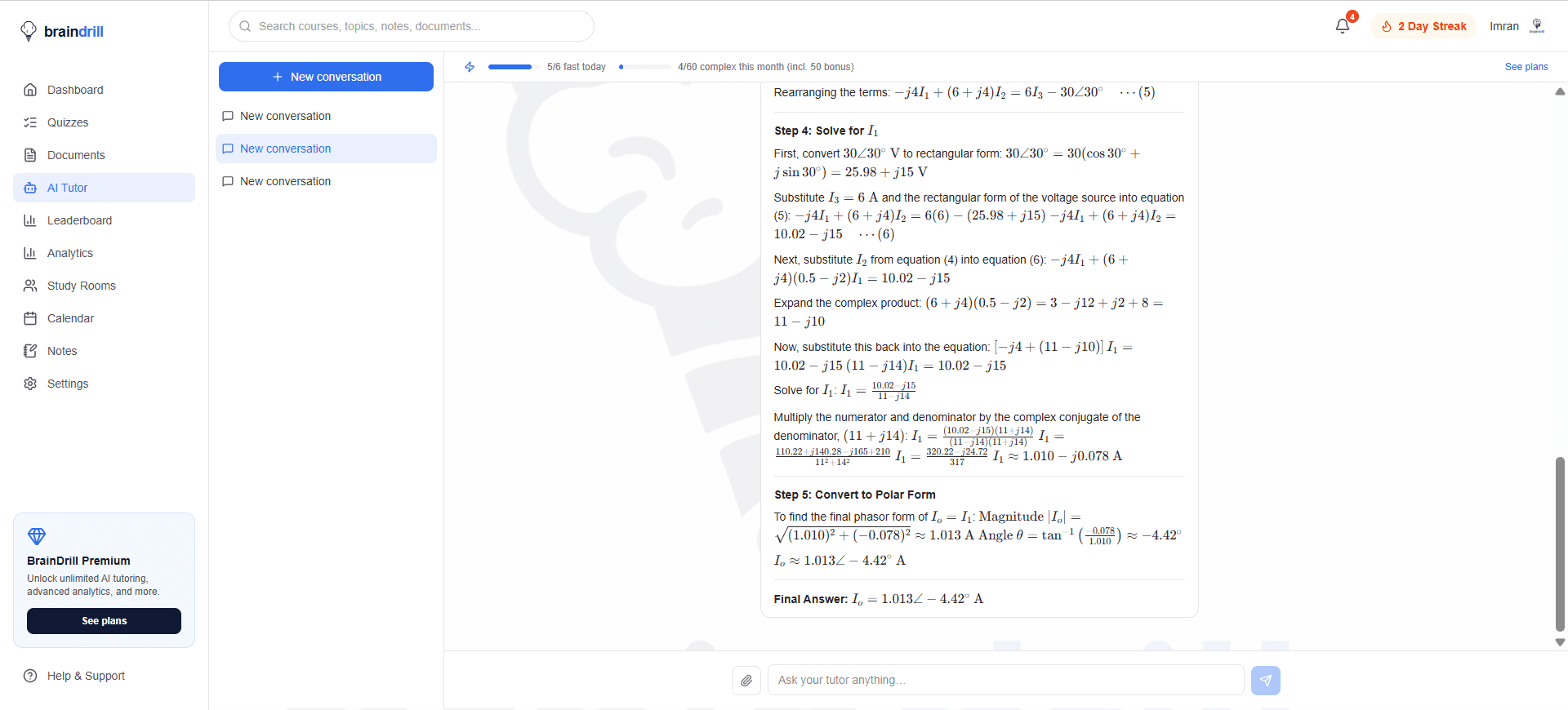
Imran Al-Ameen Adebayo
Engineering student and founder of BrainDrill — building the study app he wished he had. Read his story →
Study smarter, straight to your inbox 📬
One short email a week: a study technique that works, a topic worth drilling, and what's new in BrainDrill. Free, no spam, unsubscribe anytime.