How to Study Medicine & Anatomy with AI (Without Cutting Corners)
By Imran Al-Ameen Adebayo · Founder of BrainDrill · 3 July 2026 · 6 min read
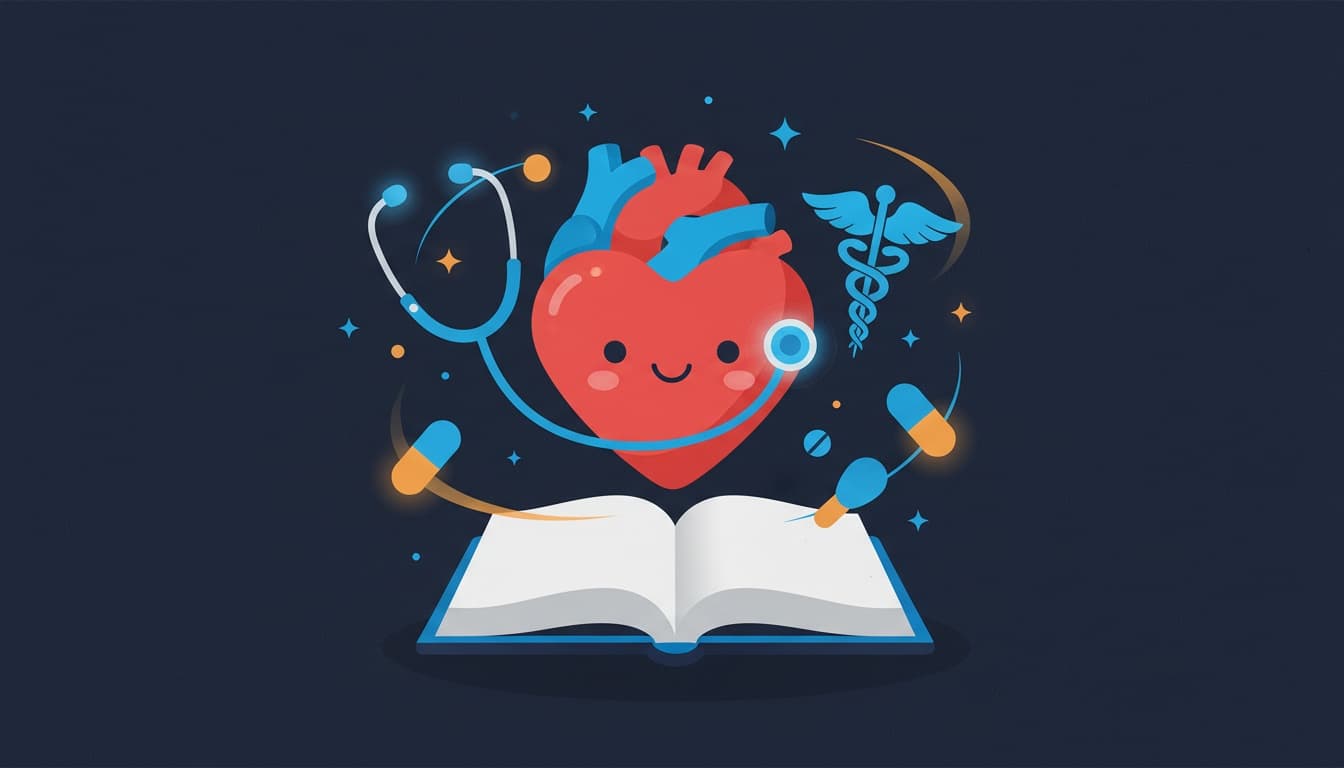
Medical school is two hard problems stacked on top of each other: an enormous volume of material and a demand for deep understanding of mechanisms. Anatomy asks you to memorise thousands of structures; physiology and pharmacology ask you to reason through pathways and drug actions. AI can help with both — but only if you aim it at active recall and real understanding, not passive summaries.
Anatomy: memorisation, but make it active
Anatomy is largely recall — origins, insertions, innervations, relations — and the research is unambiguous: testing yourself beats rereading. Turn your lecture notes and atlases into practice questions and drill them with spaced repetition. Use an AI tutor to build mnemonics and to explain the clinical relevanceof a structure, which makes it far stickier than a bare list. Quiz from your own material so it matches your faculty's emphasis and your exam's style.
Physiology & pharmacology: understand the mechanism
This is where rote memorisation quietly fails people. You need to reason through the renin-angiotensin system or a receptor's downstream effects, not just recite them. Use the tutor the way you'd use a patient senior: “walk me through what happens to cardiac output if preload drops — and why,” then push back at each step until the mechanism is genuinely clear. Understanding a mechanism once beats memorising ten facts that fall out of it.
Turn everything into questions
The volume of medicine makes passive review a trap — you can reread a whole system and retain almost nothing. Convert each topic into a quiz (multiple-choice for rapid recall, short-answer for the reasoning) and take it cold the next day. Keep an error log of the facts and mechanisms that keep slipping; in the run-up to exams, that log is your highest-yield revision. On BrainDrill you can upload a lecture PDF or slide deck — scanned ones included — and get a quiz from it in seconds, with written answers graded against marking points.
Snap the diagrams you can't parse
Medicine is full of diagrams — pathways, cycles, cross-sections. When one won't click, photograph it and have the tutor explain it step by step. It also draws process and flow diagrams in its answers, which helps for anything sequential (a clotting cascade, a metabolic pathway) far more than a wall of text.
The line you must not cross
For clinical judgement, drug doses, and anything that touches patient care, your faculty, textbooks, and supervising clinicians are the authority — not an AI, and not this article. Use AI to learn and revise the science faster; verify anything clinical against trusted medical sources. Used that way — active recall, mechanisms explained, your own notes quizzed — an AI tutor is a genuinely powerful study partner for the hardest degree there is.
Put this into practice with BrainDrill
An AI tutor that shows its work step by step, quizzes generated from your own notes, and live study rooms with friends. Free to start — no card needed.
Try BrainDrill free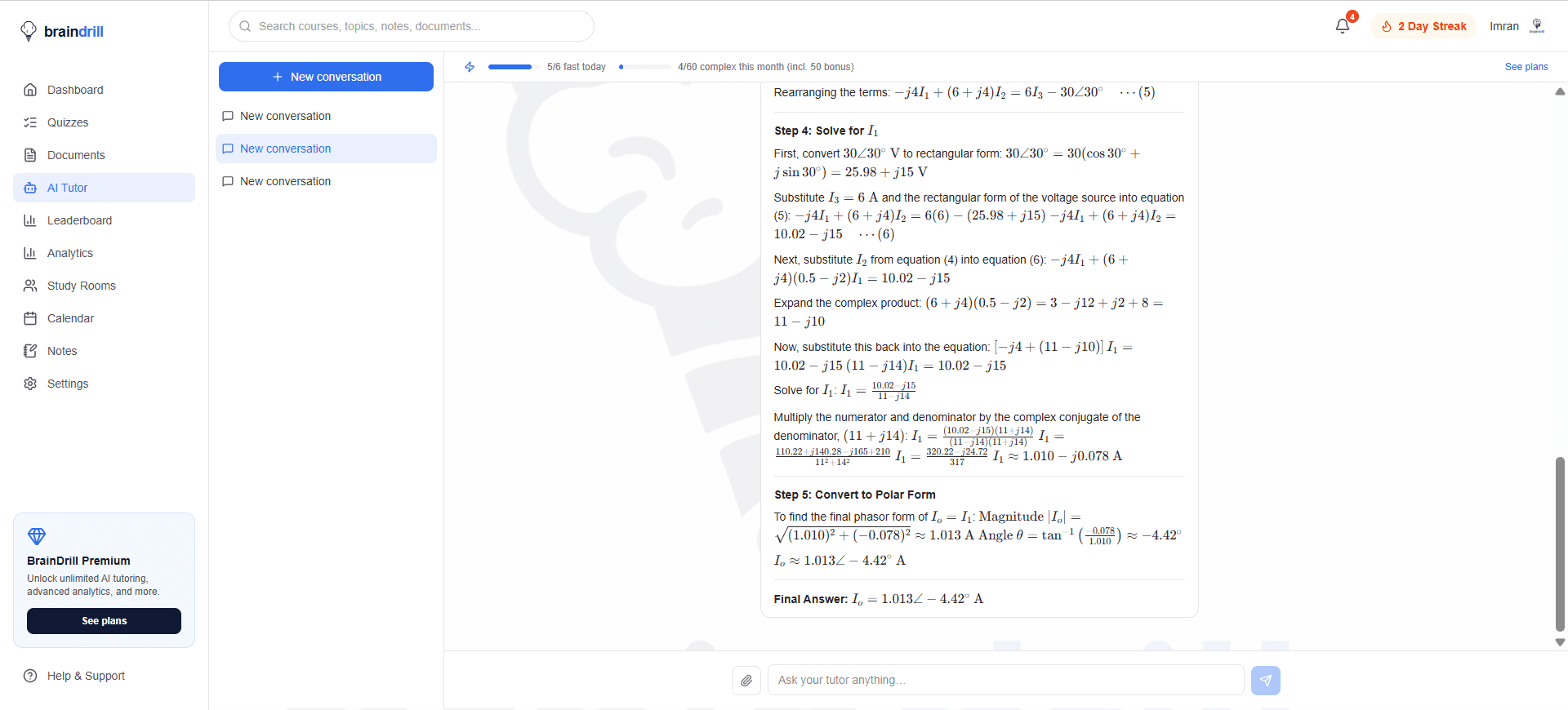
Imran Al-Ameen Adebayo
Engineering student and founder of BrainDrill — building the study app he wished he had. Read his story →
Study smarter, straight to your inbox 📬
One short email a week: a study technique that works, a topic worth drilling, and what's new in BrainDrill. Free, no spam, unsubscribe anytime.