
A-Level Maths Revision: How to Go From a C to an A
By Imran Al-Ameen Adebayo · Founder of BrainDrill · 12 July 2026 · 6 min read
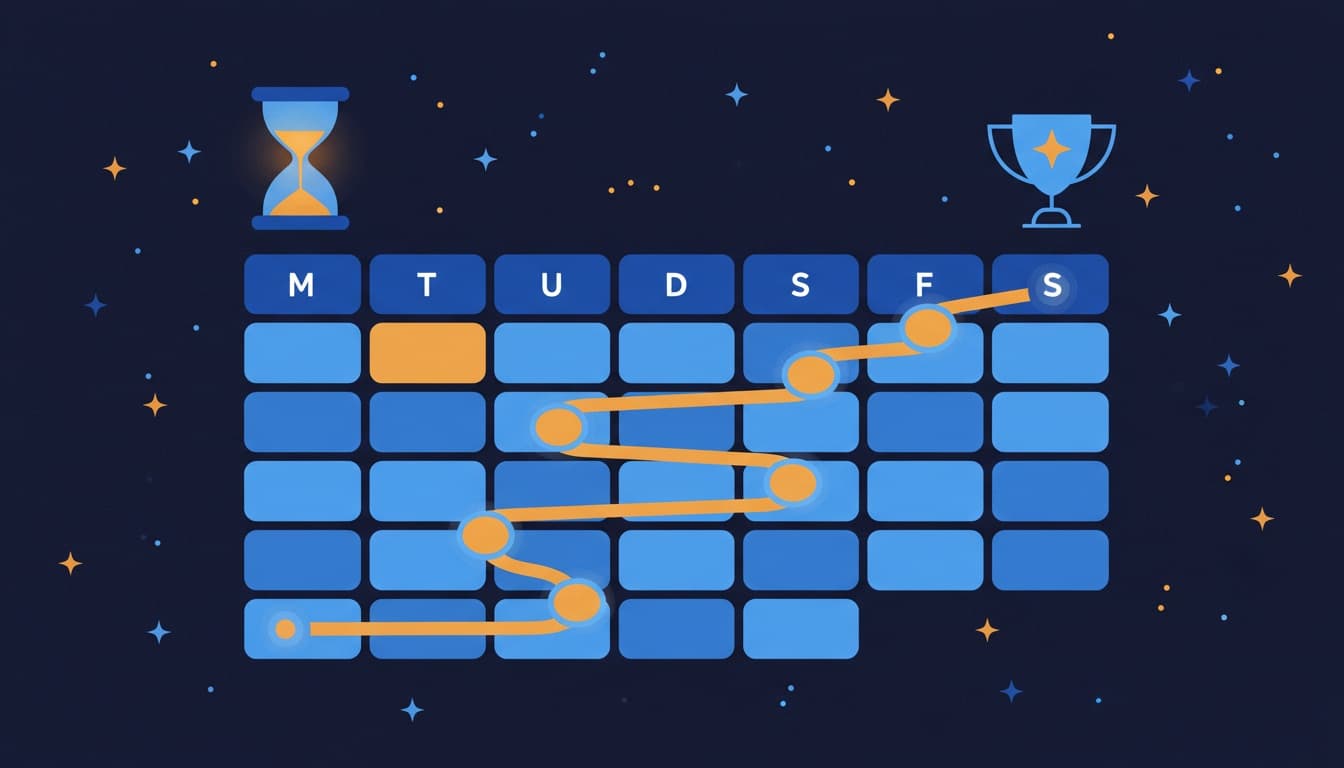
A-Level Maths has a reputation for being brutal, but its mark schemes are the most transparent in the system: M marks for method, A marks for accuracy, printed for every paper going back years. Revision that ignores mark schemes is guessing. Revision built on them is engineering.
Revise the spine first
Whatever your board, the same core carries the paper: differentiation, integration, algebra and functions, trigonometry, exponentials and logs, vectors. If your calculus is shaky, nothing else matters — it touches half the paper directly or indirectly. Drill differentiation and integration in BrainDrill's free A-Level Maths bank until the rules are reflex, then move to the applied topics.
The past-paper cycle (the only revision method that reliably works)
- Do a past-paper section timed, no notes.
- Mark it yourself against the official scheme — award M and A marks honestly.
- Log every dropped mark: topic, and whether it was method, accuracy or presentation.
- Re-drill the logged topics with fresh questions before the next paper.
Two cycles a week from spring is transformative. The log turns "revise maths" — an impossible task — into "fix these nine specific leaks", which is very possible.
Understand, don't memorise — but automate the basics
There's a fashionable idea that understanding is everything and drilling is beneath you. A-Level Maths punishes that. You need both: genuine understanding of why the chain rule works, AND enough repetition that applying it costs you zero seconds of thought in the exam. When a step makes no sense, don't copy it into your notes hoping it sticks — get it explained immediately, step by step, then reproduce it yourself on a blank page. That second step is where the learning happens.
Presentation marks are free marks
- Show the substitution line in every integral — that's usually where the M mark lives.
- Give exact answers unless the question says otherwise; round only at the end.
- State the rule you're using in words when the question says "show that".
- Never cross out working unless you've replaced it — crossed-out correct work scores nothing.
The final month
Papers, papers, papers — but always with the marking and logging steps. A paper done without honest self-marking is entertainment, not revision. And protect your sleep in exam week: algebra accuracy is the first thing fatigue destroys, and accuracy marks are exactly what separate the B from the A.
Frequently asked questions
How many hours of revision does A-Level Maths need?+
Quality beats hours, but a realistic benchmark is 4–6 focused hours a week from January, rising to 8–10 in the final six weeks — with at least two-thirds of that time spent solving past-paper questions rather than reading notes.
Which A-Level Maths topics come up every year?+
Differentiation (including chain, product and quotient rules), integration, quadratics and inequalities, trigonometric identities and equations, exponentials and logarithms, and vectors. These core topics carry the majority of marks on every board — Edexcel, AQA and OCR alike.
Why am I losing marks even when my method is right?+
Usually presentation: skipped lines the examiner needed to award method marks, unrounded or wrongly-rounded final answers, and missing units. Mark schemes pay for visible method — write like the examiner is grading each line.
Put this into practice with BrainDrill
An AI tutor that shows its work step by step, quizzes generated from your own notes, and live study rooms with friends. Free to start — no card needed.
Try BrainDrill free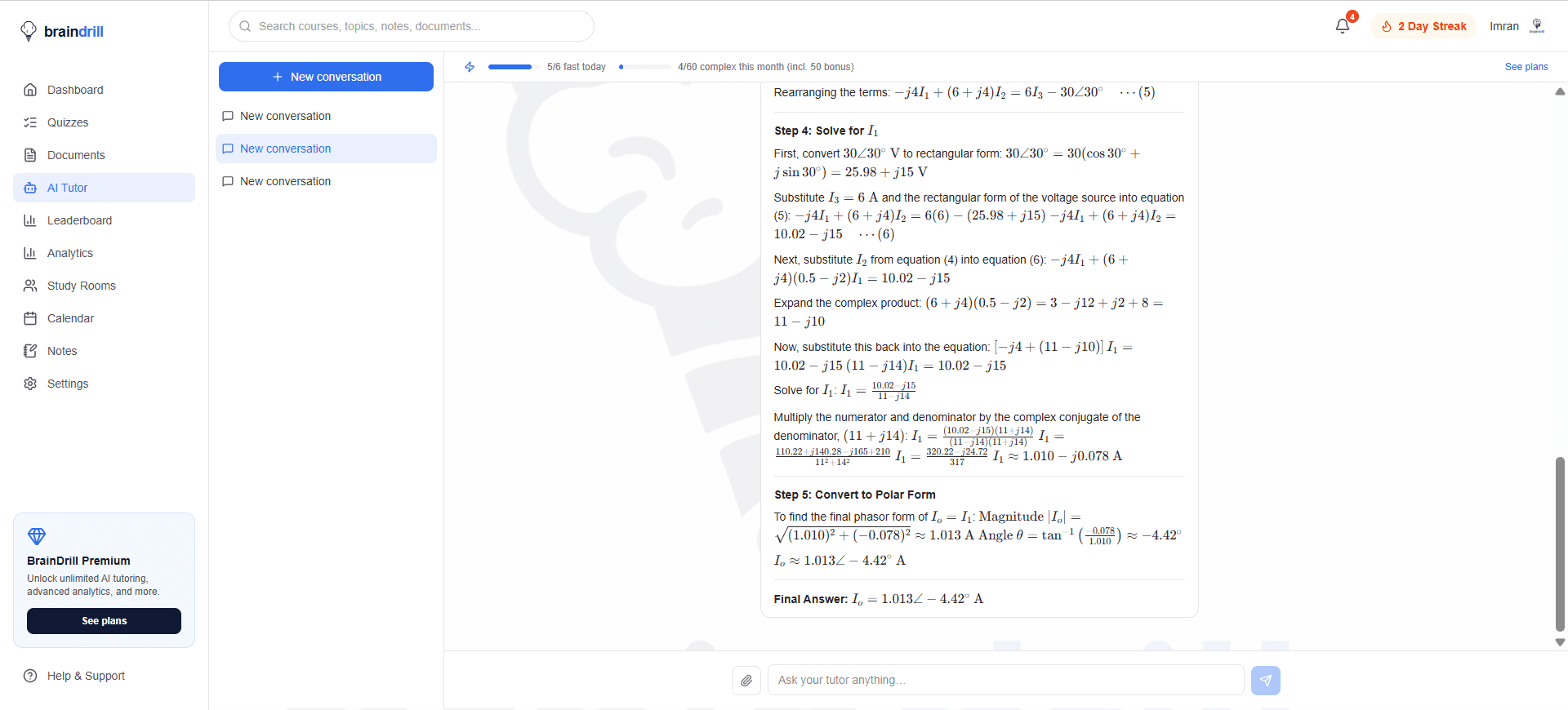
Imran Al-Ameen Adebayo
Engineering student and founder of BrainDrill — building the study app he wished he had. Read his story →
Study smarter, straight to your inbox 📬
One short email a week: a study technique that works, a topic worth drilling, and what's new in BrainDrill. Free, no spam, unsubscribe anytime.